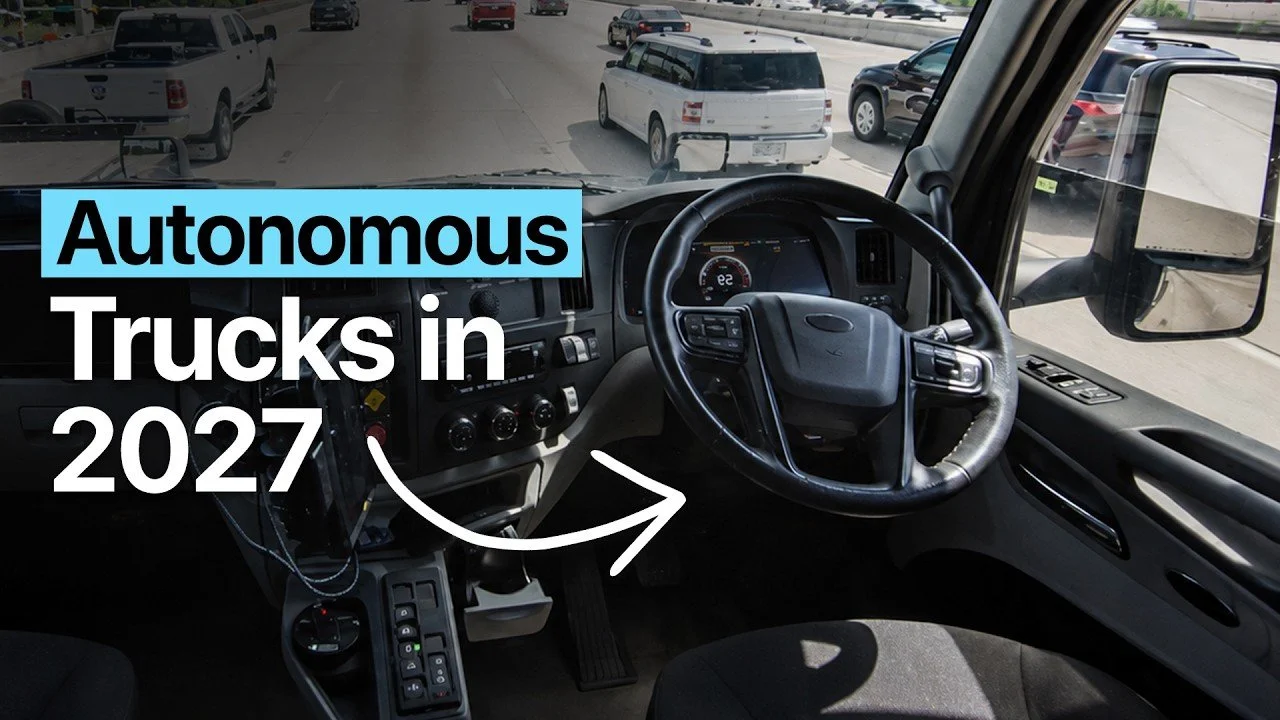
What Will It Take to Scale Autonomous Trucking? — with Nick Elder, Torc Robotics
Autonomous trucks mean so much more than "driverless."
Nick Elder, VP of Commercialization at Torc Robotics, joins The Fleet to explain what has to be true before autonomy becomes something fleets can actually use. He breaks down why Level 4 requires a fundamentally different safety architecture, what happens when sensors and autonomous systems need repair or recalibration, and why removing the driver doesn't remove all the work a driver was doing.
We also get into how autonomy could fit into existing freight networks, where it may not make economic or operational sense, and what new fleet models could emerge once companies begin operating autonomous assets at scale.
Chapters:
0:00 — Why Driverless Trucks Change More Than Driving
1:27 — Meet Nick Elder and Torc Robotics
2:41 — Why Torc Isn't Racing to Be First
4:05 — From DARPA to Autonomous Class 8 Trucks
8:15 — What Level 4 Autonomy Means
23:28 — Why Level 4 Requires a Different System
26:07 — The Safety Promise of Autonomous Trucks
28:20 — Why Class 8 Long-Haul Comes First
29:31 — The Business Case for Autonomous Trucking
31:42 — Will Autonomous Trucks Replace Drivers?
35:21 — What Fleets Actually Want From Autonomy
37:51 — Why the Hub-to-Hub Model Changed
41:20 — Where Autonomous Trucking Actually Fits
46:23 — What Truck Drivers Do Besides Driving
50:26 — How Fleets Should Prepare for Autonomy
52:39 — New Fleet Models Autonomy Could Enable
55:36 — What's Next for Torc Robotics